
In autumn 2025, the ReForest project intensified its community-building efforts in Bulgaria through a series of targeted trainings for students and farmers. These activities are part of ReForest’s broader mission to actively build an innovation community where farmers, students, researchers, and policymakers collaborate to accelerate the transition toward sustainable agriculture.
Investing in the Next Generation: Agroforestry School Trainings
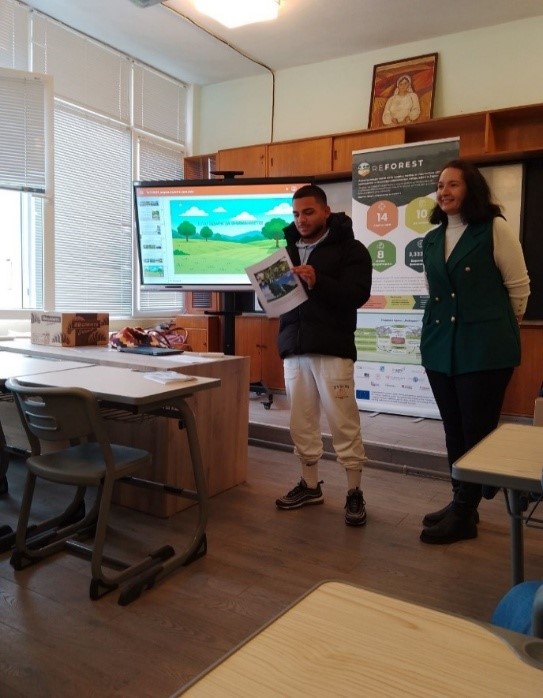
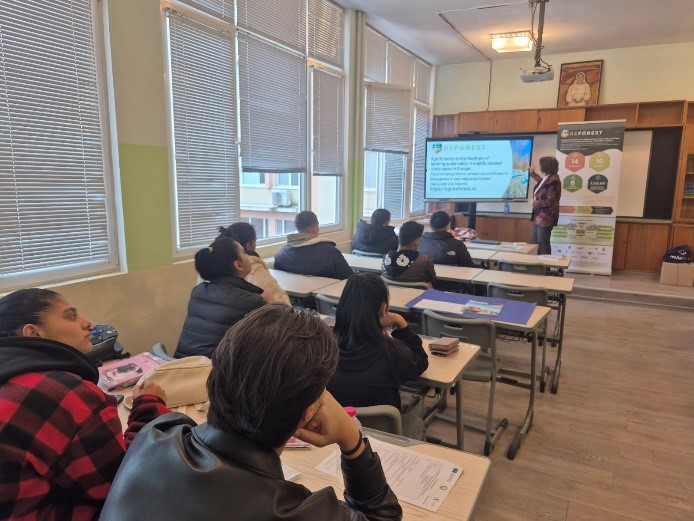
In October and November 2025, agroforestry education sessions were organised for students from the Vocational High School of Agriculture “Hristo Botev” in Yambol and the Vocational High School of Agriculture in Chirpan.
The trainings introduced students to the principles and systems of agroforestry, the integration of trees into agricultural landscapes, and the environmental and economic benefits of diversified farming models. Beyond theory, the sessions connected agroforestry with innovation: students explored the FarmTree platform for planning agroforestry farms, the use of drones in agricultural monitoring, and methods for measuring chlorophyll content and NDVI through portable instruments.
These activities directly support one of ReForest’s key strategic objectives, namely empowering future farmers and agricultural professionals with the knowledge, digital tools, and scientific understanding necessary to implement sustainable land management practices. By engaging students early, the project strengthens long-term capacity building and ensures that agroforestry becomes part of mainstream agricultural thinking rather than an alternative niche approach.
Supporting Farmers as Local Innovators: Agroforestry Workshops in Zetyovo and Yasenovo
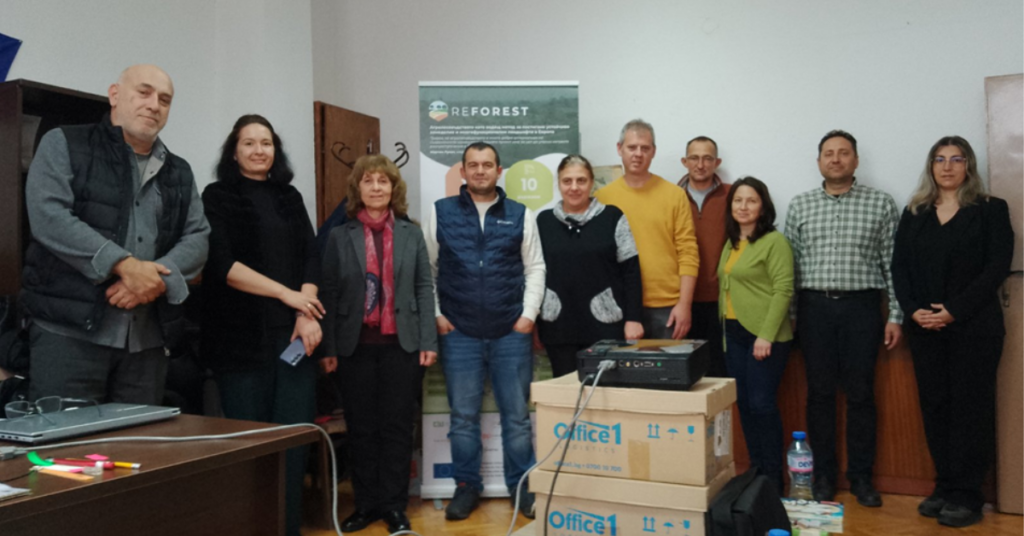
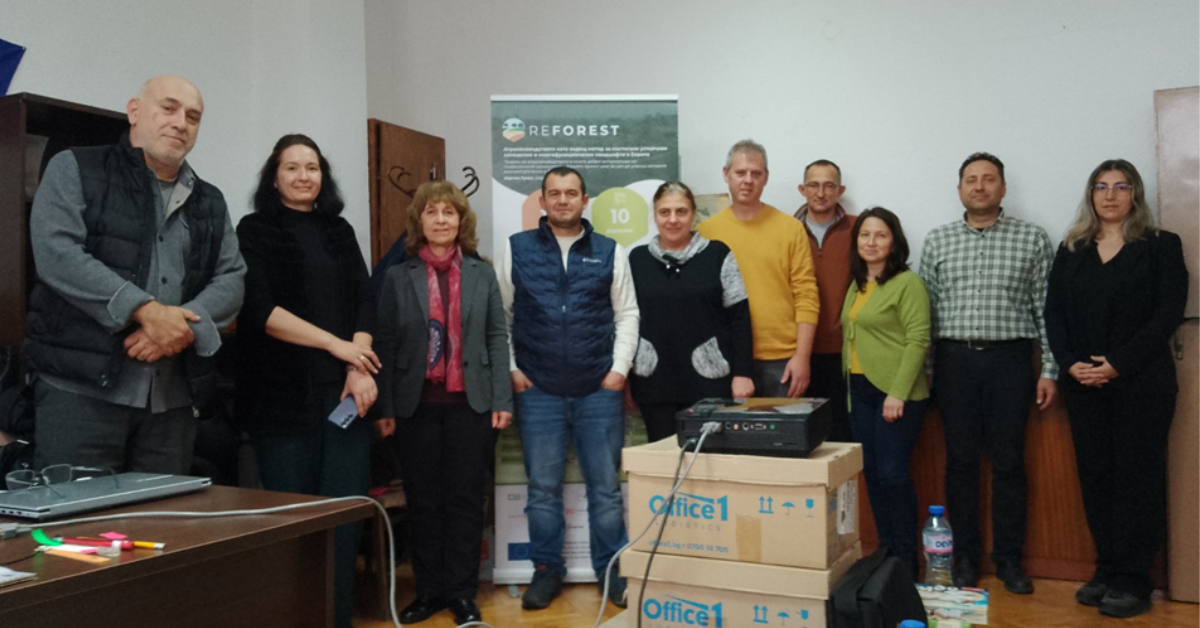
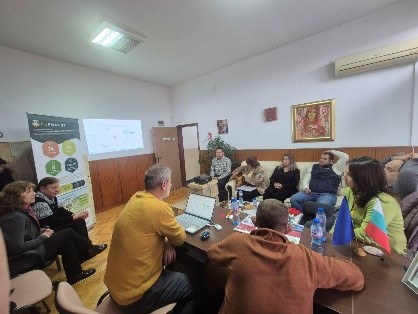
Parallel to the school initiatives, ReForest organised two farmer workshops under the title “Agroforestry as a Leading Method for Achieving Sustainable Agriculture” held on 16 October 2025 in Zetyovo village and on 28 November 2025 in Yasenovo village, Stara Zagora district.
The workshops brought together farmers and created space for dialogue between practitioners and project experts. Participants explored the different types of agroforestry systems, the rationale behind tree integration in farming systems, and the environmental, economic, and climate-related benefits of diversified land use.
Special attention was given to practical tools developed within ReForest, including the Knowledge Hub, the FarmTree planning software, and digital tools for calculating farm carbon footprints. These instruments translate scientific research into accessible, farm-level decision support, enabling producers to assess productivity, financial viability, and environmental performance.
Farmers are not passive recipients of information; they are local innovators and essential partners in refining, testing, and validating agroforestry models. By creating structured opportunities for discussion and knowledge exchange, ReForest strengthens trust, builds networks, and encourages peer learning — key pillars of sustainable community development highlighted in the project’s dissemination strategy.
Both the school trainings and farmer workshops contribute to a shared objective: building a strong agroforestry community that connects science, practice, and future professionals.
ReForest’s approach recognises that the transition toward climate-resilient agriculture requires more than technical solutions. It requires informed stakeholders, engaged local communities, accessible digital tools, and continuous dialogue between research and practice.
We thank Trakia University, Bulgaria, for organising the events.
 Bulgarian
  English
  German
  French
  Spanish
  Danish
  Hungarian
  Czech
Czech  Dutch
Dutch