
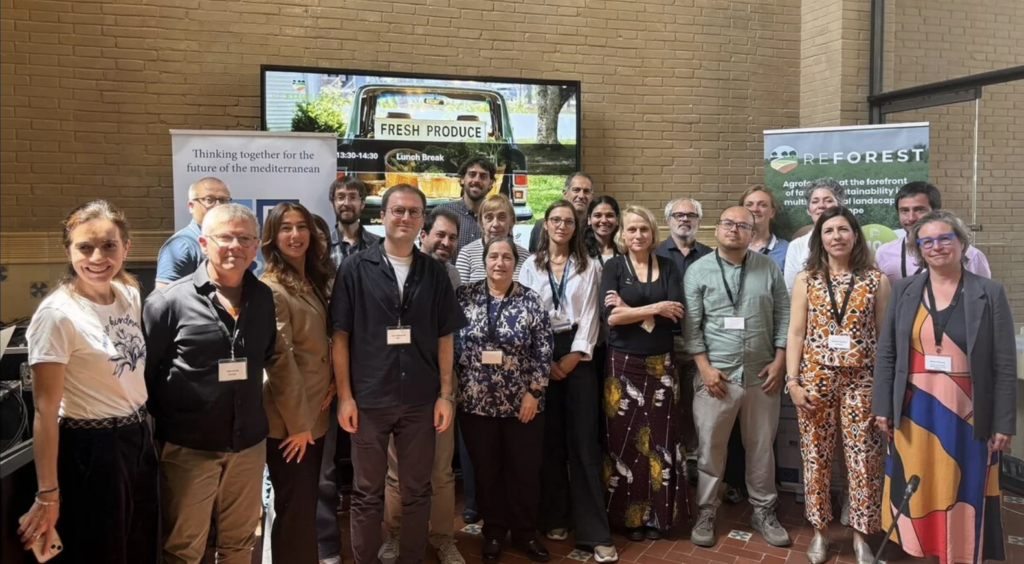
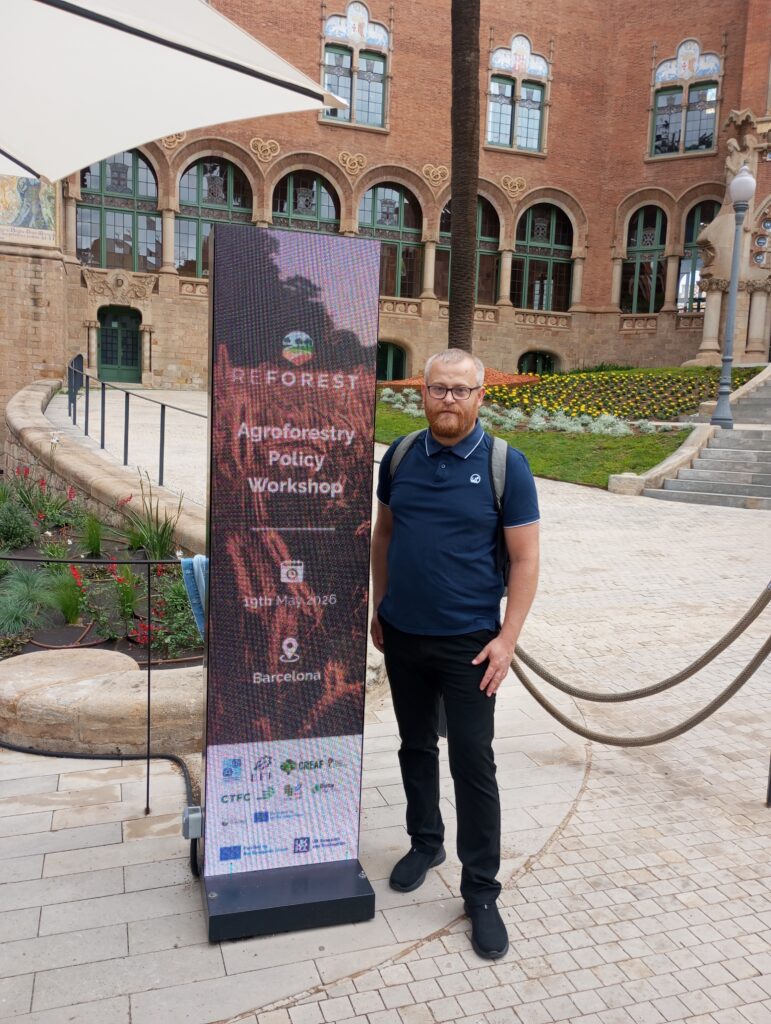
On 19 May 2026, the Евро-средиземноморска асоциация на икономистите (ЕМЕА) hosted the Agroforestry Policy Workshop at the Recinte Modernista de Sant Pau in Barcelona, Spain, within the framework of the ReForest project.
The workshop was co-organised by EMEA, CREAF, the European Forest Institute (EFI), BETA Technological Centre, and the Centre Tecnològic Forestal de Catalunya (CTFC), bringing together policymakers, researchers, practitioners, and sector stakeholders to discuss how future European policies can better support the upscaling of agroforestry across Europe.
The event opened with welcoming remarks by Yara Saab, Director of EMEA, who highlighted the importance of strengthening the role of agroforestry within the upcoming Common Agricultural Policy (CAP) 2028–2034 framework and fostering stronger cooperation between policy, science, finance, and practice.
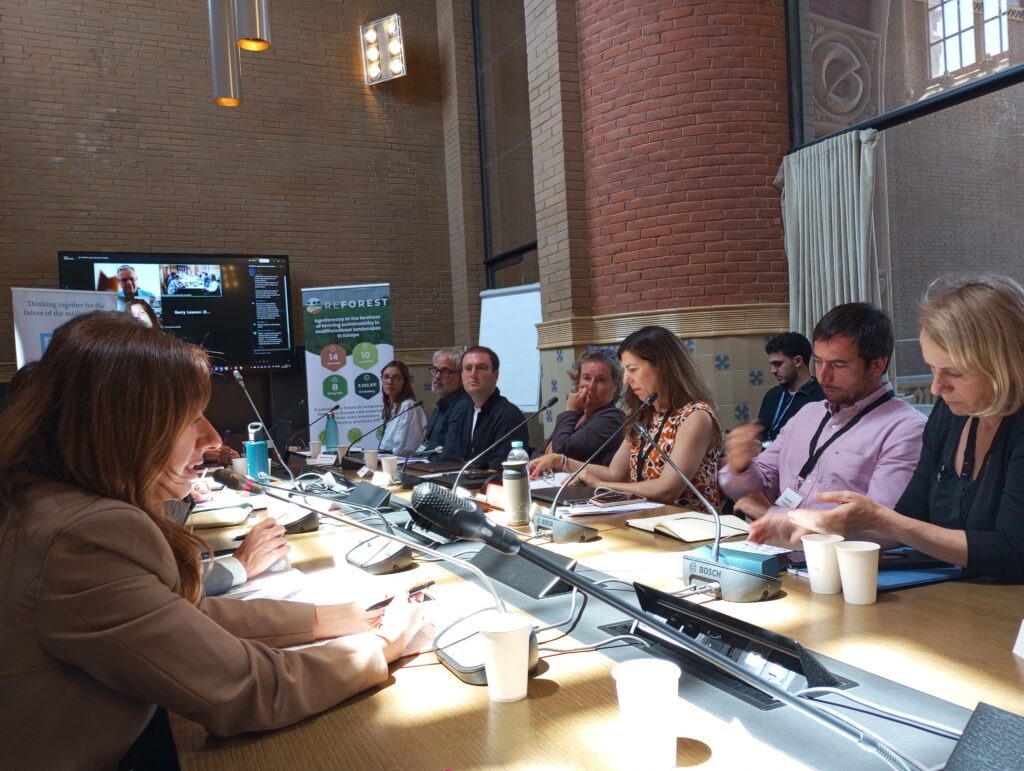
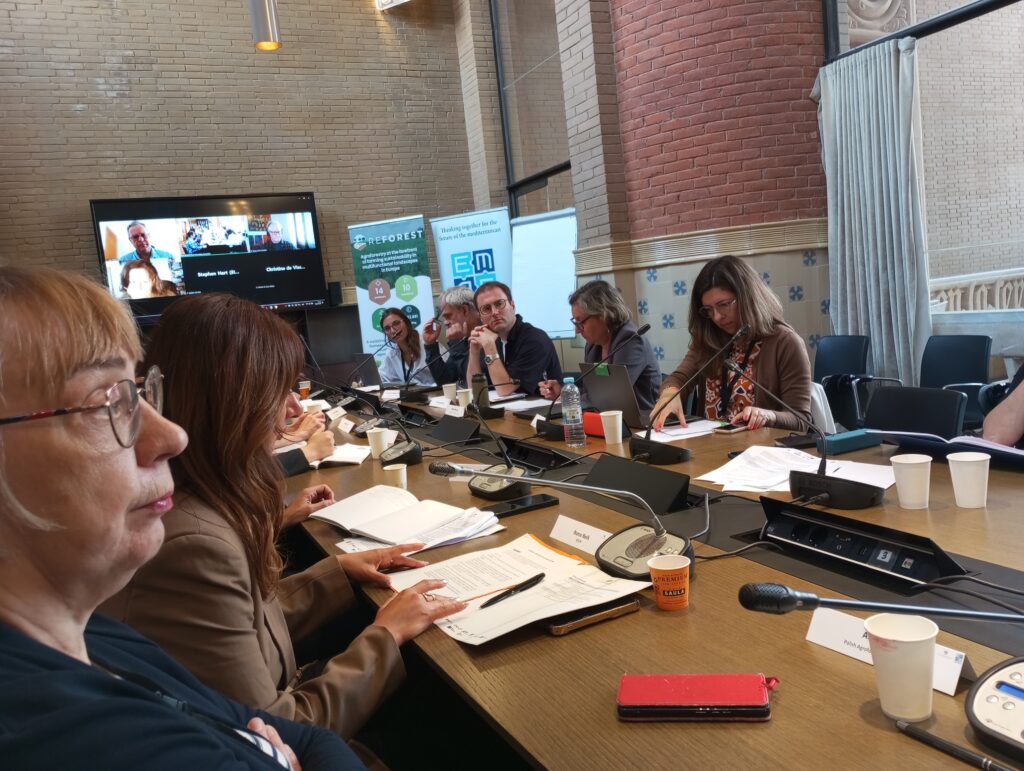
The sessions were moderated by Tiago Zibecchi (EMEA Researcher), Christine de Visser (Project Manager on ReForest for EMEA), and Burcu Berk (Project Manager & Researcher at CREAF). Discussions focused on how the future CAP framework can better integrate agroforestry through strategic planning, improved synergies across funding streams, and results-based implementation approaches.
The workshop explored three interconnected challenges that continue to limit agroforestry adoption in practice.
Participants discussed the persistent difficulties in applying agroforestry definitions consistently across CAP support systems, land registers, and administrative procedures. The conversation highlighted the need for more coherent implementation approaches across Member States and regions, while maintaining flexibility within National and Regional Partnership Plans (NRPPs).
Simplification measures that could reduce administrative burden and uncertainty for farmers were also identified as a key priority for enabling wider agroforestry adoption.
A second part of the discussion focused on digital tools, innovation, and monitoring, reporting, and verification (MRV) systems.
Participants emphasised that existing data gaps related to trees on farms continue to limit agroforestry visibility within CAP implementation and environmental reporting frameworks. Digital innovation and MRV systems were recognised as important tools for supporting results-based approaches, improving transparency, and strengthening trust across policy and finance mechanisms.
At the same time, the workshop highlighted the importance of ensuring that digital tools remain practical, accessible, and inclusive for farmers and land managers, particularly those with limited technical or financial resources.
The final exchanges addressed финансови пречки that continue to affect agroforestry transitions, particularly high upfront investment costs and delayed economic returns.
Participants explored how blended finance approaches and de-risking mechanisms including guarantees, concessional finance instruments, insurance solutions, and nature capital approaches could improve the bankability and attractiveness of agroforestry investments.
The discussion also highlighted the growing importance of market development, sustainability labelling, and credible environmental claims in helping agroforestry systems capture added value across supply chains.
Throughout the workshop, participants agreed that agroforestry has strong potential to contribute to climate resilience, biodiversity protection, soil health, and more sustainable food systems across Europe.
However, scaling up agroforestry will require stronger alignment between policy frameworks, financial mechanisms, innovation systems, and practical implementation on the ground.
Through its interactive and collaborative format, the workshop contributed to the development of actionable policy recommendations reflecting the perspectives and experiences of a diverse range of stakeholders engaged in Europe’s agroforestry transition.
The ReForest project continues to support knowledge exchange, co-creation, and policy dialogue aimed at enabling the wider adoption of agroforestry systems across Europe.
 Bulgarian
  English
  German
  French
  Spanish
  Danish
  Hungarian
  Czech
Czech  Dutch
Dutch