Tools and technologies to support sustainable agroforestry practices
The FarmTree Tool: farms, trees, and crops quantified
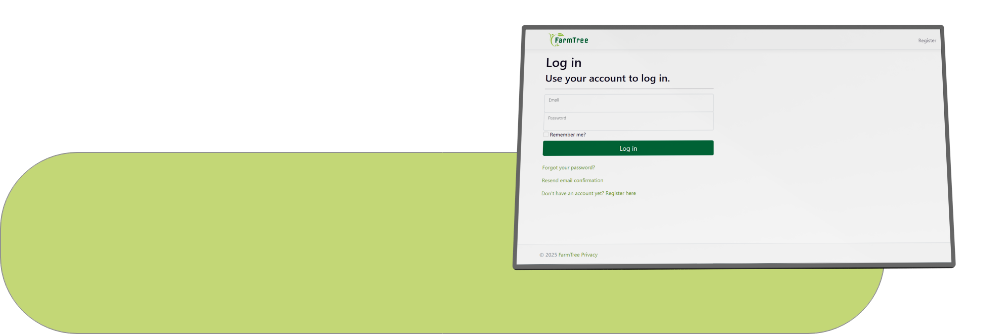
The FarmTree Platform is a user-friendly digital solution designed to support decision-making in agroforestry planning and implementation. It integrates a software-based agroforestry model with an intuitive online interface and a scientific species database that defines the characteristics of hundreds of relevant trees and crop species across different geographical locations.
The platform enables land users and agroforestry practitioners to replicate existing or hypothetical scenarios in an online environment, allowing flexible design of unique agroforestry systems in terms of species composition, spatial arrangement, and management choices. It then forecasts the long-term productive, financial, and agroecological performance of each system, including projected yields, costs and revenues, nutrient and water flows, carbon sequestration, biodiversity, and many more.
By providing a quick and comprehensive overview of farming system performance, the FarmTree Platform helps users make informed decisions that can scale sustainable land-use practices in European agroforestry and beyond.
The ReForest Knowledge Hub
The Knowledge Hub is part of the ReForest Engagement platform designed to support farmers in planning agroforestry systems and making well-informed management decisions adapted to local contexts. It is particularly aimed at farmers who have not yet converted to AF, with the main goal of bringing together past and current research to address knowledge gaps around AF design and performance, the delivery of ecosystem services, and the potential impacts on biodiversity and soil carbon.
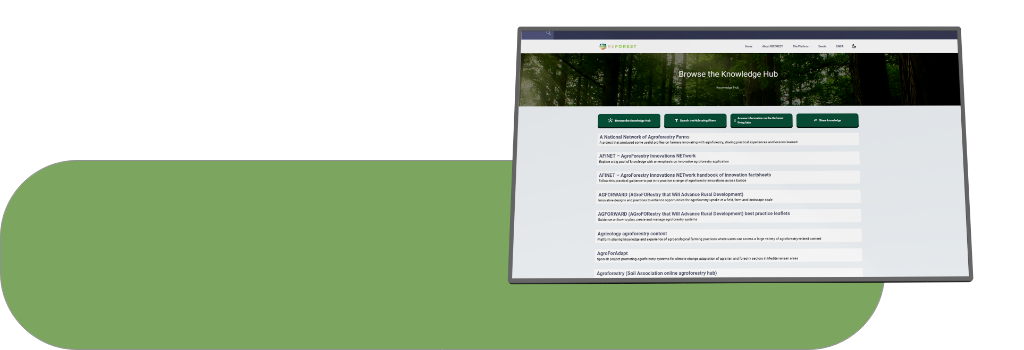
The Hub brings together a database of resources—including datasets, decision support tools, reports, videos, podcasts, and websites—collected through the knowledge and experience of the ReForest consortium and its wider European and international networks. Currently, it already offers 80 diverse resources from 15 countries across Europe, establishing a strong baseline that will continue to grow throughout the project in response to the needs of farmers and researchers. To ensure relevance, the resources are limited to those originating broadly within Europe.
Users can browse the resources alphabetically or refine their search using filters for AF type, AF focus, farming system, geographical scope, and content format. This tailored filtering capacity makes the Hub more practical and user-friendly compared to other similar knowledge platforms. Each resource has its own page with a short description, technical details, and acknowledgements, ensuring users can quickly understand its relevance and potential application.
ReForest Public Goods Tool (offline version)
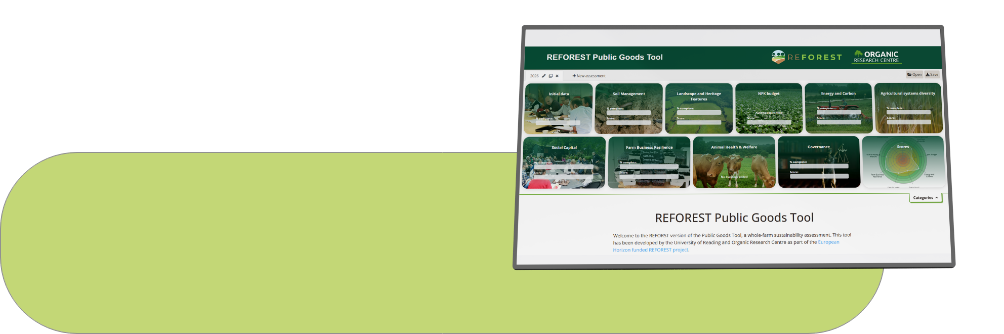
The Public Goods Tool (PG Tool) was originally developed by the Organic Research Centre (ORC) in 2011 to assess the public goods provided by farms undertaking organic conversion. Since then, PG Tool has been adapted for many other purposes. Under the ReForest project, the tool has been further developed and adapted to incorporate the benefits of trees into farm assessments.
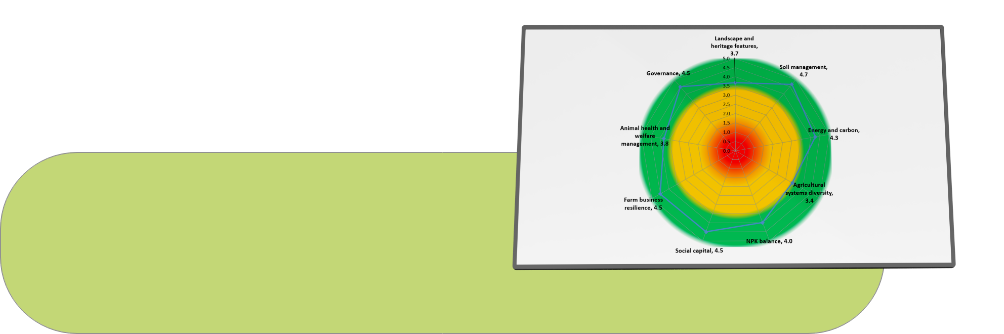
The ReForest PG Tool assesses the following public goods at the farm level including landscape and heritage features, soil management, energy and carbon, agricultural systems diversity, nutrient balance (NPK), social capital, farm business resilience, animal health and welfare management, and governance.
For each of the above public goods, the tool provides a score on a scale of 1 (poor) to 5 (excellent). This is useful both for researchers to assess the sustainability of different agroforestry systems, and for farmers to identify areas of strengths and potential improvements at their farm.
The PG Tool is based in Microsoft Excel. To complete the tool, typically a researcher will visit the farmer for up to half a day to guide them through the tool and explain the results.
If you are interested in using the ReForest PG Tool in its offline version, please contact tom.staton@reading.ac.uk.
Public Goods Tool (online version)
Based on the excel version, the Public Goods tool has been further developed under the ReForest project into a fully online tool to reflect the specific sustainability benefits that trees and agroforestry practices bring to farming systems.
The fully updated ReForest PG Tool integrates the experience gathered by ORC through the years to evaluates a wide range of public goods at the farm level including soil management, NPK balance, energy and carbon, diversity, social capital, farm business resilience, animal health and welfare, and the contribution of landscape and heritage features. These categories are visualised clearly and scored to provide a holistic picture of farm-level sustainability.
Designed to be intuitive and accessible, the new tool features a user-friendly online interface. This version of the tool removes the need for in-person facilitation and allows anyone, whether farmers, landowners, advisors, or researchers, to use the tool independently and gain insights into the sustainability of their land management practices.
For further information or support using the PG Tool, please contact: christian.g@organicresearchcentre.com
Agroforestry Map of Europe
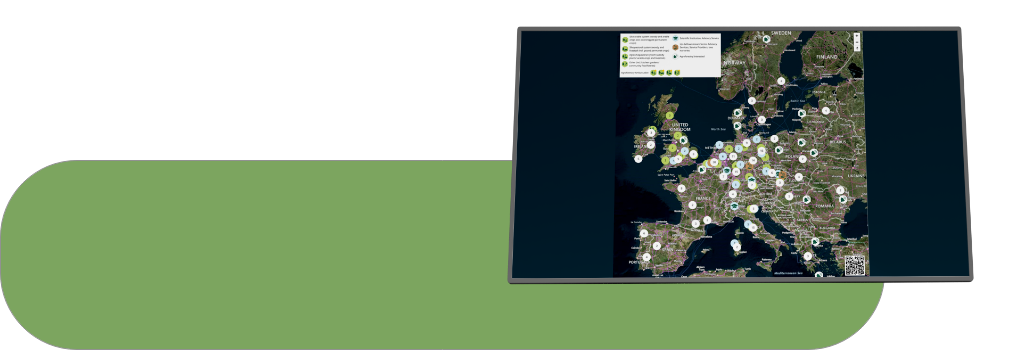
The Agroforestry Map of Europe is an interactive platform that brings together examples of agroforestry practices across the continent. Originally developed in the AGFORWARD project, the map has now been expanded and updated under the ReForest project in collaboration with DIGITAF. Instead of using existing national and regional databases it provides quick and easy access to a single online tool with a standardised structure, ensuring comparability across Europe.
The map allows different types of stakeholders, including farmers, educational and advisory institutions, and interested parties planning agroforestry systems to register their activities. Entries are displayed with distinct categories and symbols, and users can upload photographs to illustrate their systems. The improved platform offers enhanced interactivity, with features such as user-managed updates, administrator verification, and safeguards for data protection.
By providing a clear and accessible overview, the Agroforestry Map of Europe makes this land-use system more visible, supports peer-to-peer learning, and enables policymakers, practitioners, and citizens to explore the diversity and potential of agroforestry across Europe.
Local links are expected soon for Denmark, Spain, Poland, Bulgaria, and Hungary.
Contribute to the map now!
Carbon and Biodiversity Estimator
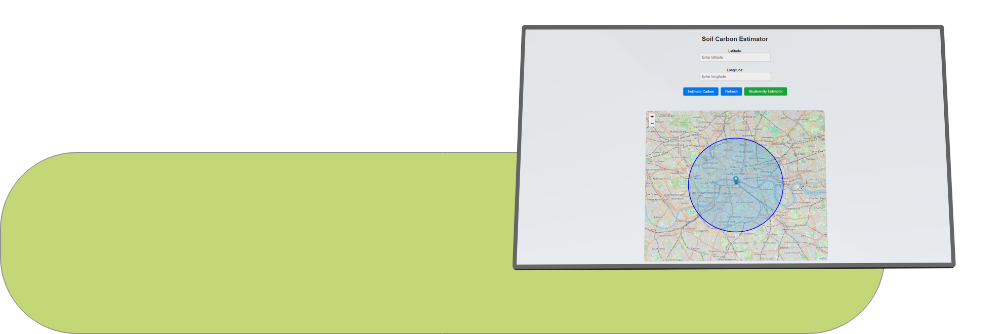
The Carbon and Biodiversity Estimator is an online predictive platform developed within ReForest to assess soil carbon and biodiversity levels across European landscapes. It integrates high-resolution satellite and UAV imagery with extensive ground-truth datasets, using advanced convolutional neural networks to capture patterns in vegetation, soil, and land use. This combination allows the tool to generate accurate, location-specific predictions that reflect both large-scale land use trends and fine-scale environmental variations.
Accessible through a simple web interface, the estimator requires only geographic coordinates to provide quantifiable results on carbon sequestration potential and biodiversity status. By combining cutting-edge machine learning with remote sensing, the tool enables stakeholders to make evidence-based decisions without needing technical expertise in data processing.
Farmers, landowners, researchers, and policymakers can apply the results to evaluate sustainability strategies, compare land-use scenarios, or support climate and conservation planning.
Agroforestry Decision-Support Tool
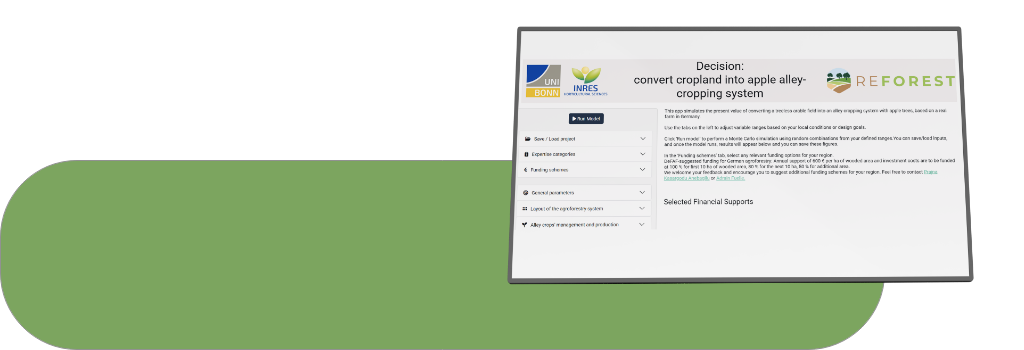
This interactive decision-support platform, developed by the University of Bonn within the ReForest project, enables farmers, advisors, and policymakers to explore the long-term viability of transitioning from conventional land use to agroforestry. Grounded in real-world case studies, it simulates investment outcomes under uncertainty by applying stochastic methods and user-defined parameters, offering a realistic picture of risks and opportunities.
The current tool suite showcases four agroforestry scenarios: an apple alley cropping system in Germany, a fruit and honey system based on an agroforestry plan from Germany, a walnut timber and nut system for high-value trees, and a silvopastoral livestock system in the UK developed through a ReForest Living Lab. Each scenario is accessible online and provides region-specific configurations that can be adapted to individual farm conditions.
With editable technical and financial assumptions, the platform integrates Monte Carlo simulations to capture uncertainty in yields, prices, and operational risks. Users can test different design alternatives making the tool a practical resource for planning, decision-making, and preparing funding applications.
CNN parameter tuner
The CNN Parameter Tuner is an innovative software platform that makes deep learning accessible to users without coding experience. It allows researchers and students to create Convolutional Neural Network (CNN) models tailored to their own image datasets in formats such as JPG, JPEG, and PNG. By streamlining the parameter tuning process, it bridges the gap in machine learning knowledge and enables anyone to build effective models for classification tasks.
The platform offers flexibility in configuring dataset splits for training, validation, and testing, while giving users control over the number of epochs, batch sizes, and the selection of activation, optimizer, and loss functions. Results can be explored through interactive visualizations, including confusion matrices and graphs, alongside detailed classification reports that support in-depth evaluation of model performance.
With the possibility to save trained models and integrate them into Python scripts or other applications, the CNN Parameter Tuner combines ease of use with advanced functionality. Its intuitive interface lowers the barrier to entry for machine learning and opens up opportunities for innovation and collaboration across disciplines.

















 English
  German
  French
  Spanish
  Danish
  Hungarian
  Czech
Czech  Bulgarian
  Dutch
Dutch