
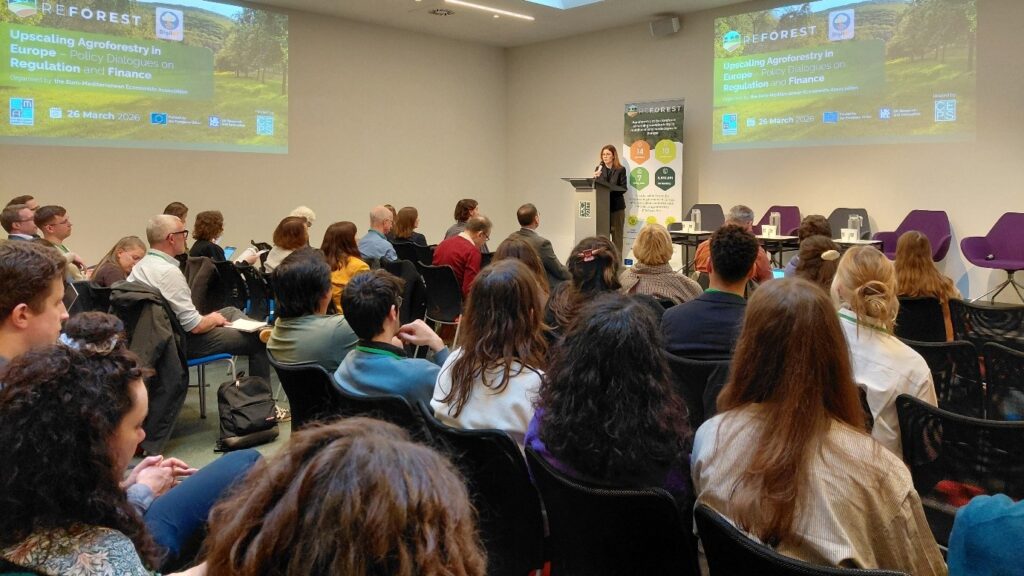
On 26 March 2026, stakeholders from across Europe gathered in Brussels for the event “Upscaling Agroforestry in Europe – Policy Dialogues on Regulation and Finance”, organised within the framework of the ReForest und DigitAF projects by the Euro-Mediterranean Economists Association (EMEA), in collaboration with the European Agroforestry Federation (EURAF) and the German Association for Agroforestry (DeFAF), and hosted at the Centre for European Policy Studies (CEPS). The event brought together policymakers, researchers, financial actors and practitioners to discuss how Europe can move from pilot experiences towards the wider and more systemic adoption of agroforestry.
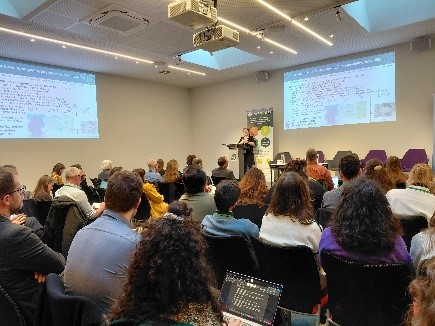
The event opened with welcoming remarks from representatives of EMEA and the European Commission, followed by a session presenting key policy-relevant research outputs from the ReForest and DigitAF projects by the project cordinators. These contributions helped set the scene for two policy dialogues focused on some of the most important challenges currently affecting the uptake of agroforestry in Europe.
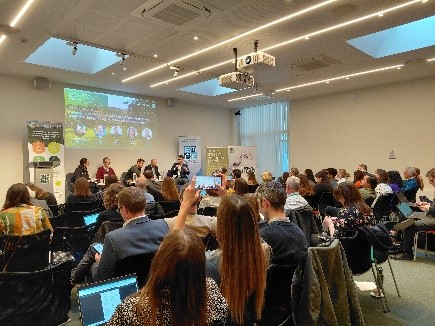
The first policy dialogue explored how the proposed National and Regional Partnership Plans (NRPPs) could help strengthen the integration of agroforestry and forestry support in future policy frameworks. The discussion addressed long-standing barriers, including policy fragmentation, administrative complexity, limited budgets, and the difficulty of fitting agroforestry within existing agricultural and forestry structures. Speakers and panellists reflected on the need for more coherent and integrated approaches that can better respond to the realities of agroforestry systems and support their uptake at regional and national level.
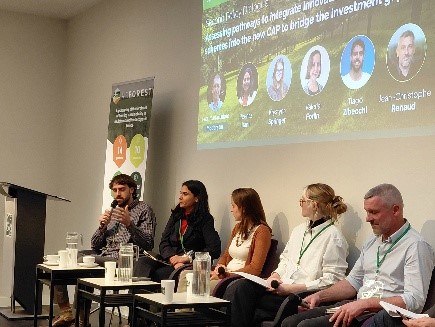
The second policy dialogue focused on financing, examining pathways to integrate innovative financing schemes into the new CAP in order to bridge the investment gap faced by farmers adopting agroforestry. Discussions highlighted the challenge of high establishment costs, long return periods, and the need for more predictable and resilient support mechanisms. The session also drew attention to the role that blended finance, guarantees, insurance markets, carbon and nature credit revenues, and performance-based approaches could play in improving the bankability and attractiveness of agroforestry investments. ReForest’s Sustainable Financing Scheme, co-developed and tested with Living Lab actors across Europe, contributed valuable insights to this debate.
What made the event especially valuable was the quality of the exchange. The discussions were both meaningful and constructive, bringing together different perspectives while maintaining a shared focus on solutions. Participants engaged openly with the regulatory and financial barriers that continue to slow down agroforestry uptake, while also identifying concrete opportunities to improve policy alignment, strengthen public and private support, and build the conditions needed for long-term impact.
Agroforestry is increasingly recognised as a transformative nature-based pathway that can enhance carbon sequestration, support biodiversity, improve soil health and diversify farm income. Yet, as highlighted during the event, its upscaling requires more than ambition alone. It depends on regulatory coherence, integrated planning, innovative financial instruments, and stronger links between public incentives and private capital.
The Policy Dialogues in Brussels confirmed that there is strong interest and momentum around agroforestry in Europe. Most importantly, they showed that meaningful dialogue between policy, research, finance and practice is essential for turning knowledge into action and creating the enabling conditions for agroforestry to scale.
Download Event Programme and information
Watch full recording of the event
 German
  English
  French
  Spanish
  Danish
  Hungarian
  Czech
Czech  Bulgarian
  Dutch
Dutch