
An interview with Antal Varga, Zöldág Farm · Reforest Project, 2025
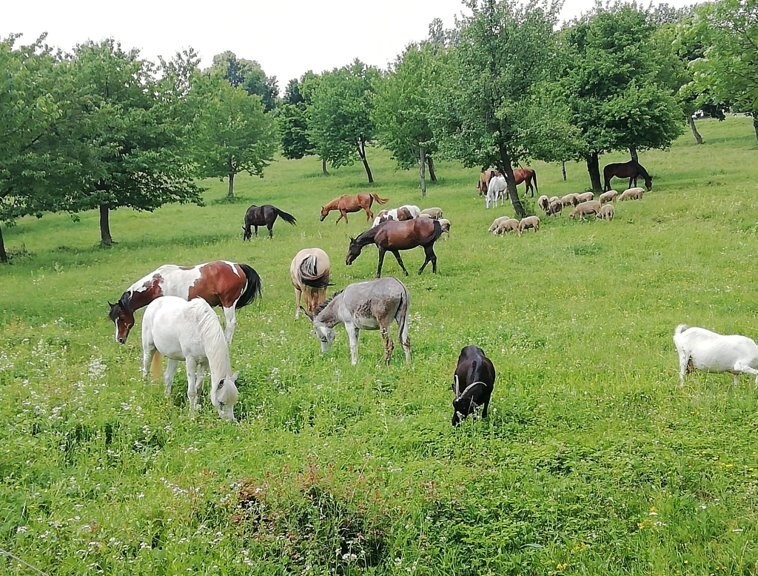
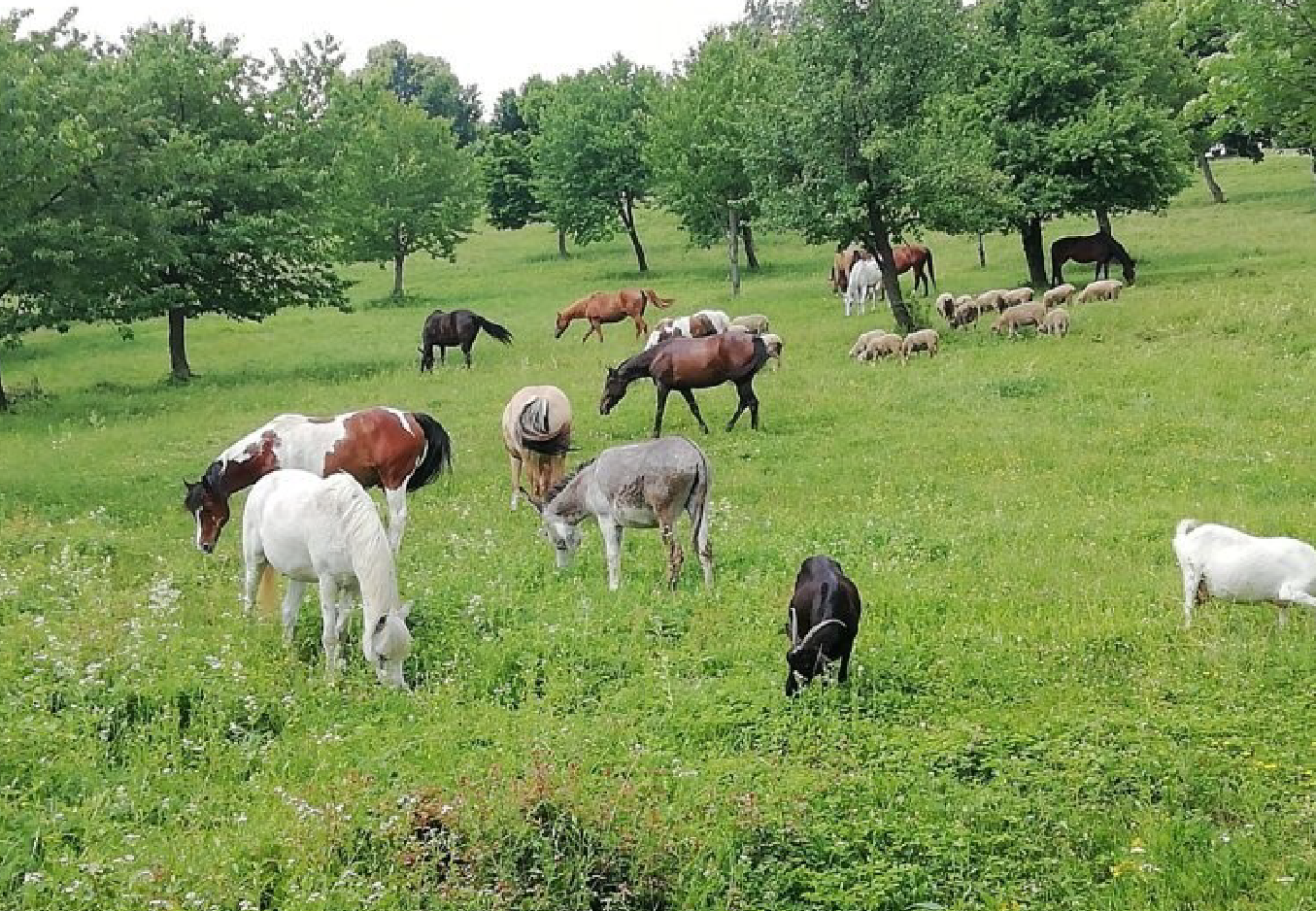
Two years ago, at the very start of the ReForest project, we visited Zöldág Farm in the Bakony hills of Hungary — a 20-hectare wood pasture that Antal Varga had painstakingly reclaimed from abandoned land, gradually shaping it into one of the region’s most ecologically and culturally rich agroforestry systems. Horses, sheep, goats, and donkeys grazed beneath scattered oaks and wild pear trees, and the farm was already hosting educational visits and cultural programs alongside its pastoral work. Today, the wood pasture has grown in both ecological maturity and public presence. A national shepherds’ festival, an international ecological conference, a new bicycle path, and a pending FAO application have all taken root here in the intervening years. In this follow-up conversation, we return to Zöldág to hear what two more years of patient stewardship — and a few surprises from the climate — have brought to the farm.
The original case study described the farm being reclaimed from abandoned land. What have been the most significant changes to the wood pasture itself since then?
One notable shift has been in how we manage the old and dying trees. We’ve felled trees that appeared to be at the end of their life, but we’ve changed our approach to what happens afterwards. Rather than clearing everything away, we now only remove fallen branches — the trunks stay, because they provide essential nesting sites for birds. We currently have five truncated beech trees with many hollows, and they’ve become genuinely important habitat features on the farm.
It’s a small adjustment in practice, but it reflects a deeper change in how we think about what “management” means on a wood pasture. Leaving something to decay in place isn’t neglect — it’s providing for species that need exactly that.
Managing the spread of wild rose, blackthorn, and hawthorn was flagged as a persistent challenge. Where does that stand now?
We continue to cut these species back, but we’ve had to adapt our methods to the terrain. In the steepest and most rocky sections, we’ve stopped using heavy machinery entirely. Those areas are now cleared by hand with grass cutters — slower and more labour-intensive, but the only viable option under the trees where tractors can’t reach.
The honest result is that the proportion of bushy areas has increased compared to the original state. That’s not entirely unwelcome — those thickets have their own ecological value — but managing the balance between open pasture and encroaching scrub remains an ongoing task. There’s no point at which you can consider it solved.
What new ecological developments have you observed — in the orchard, the medicinal herb garden, or the wider pasture area?
Several things have started to come into their own. The dogwood grove and the rare wild service trees have begun bearing fruit — both are ecologically significant species and it’s satisfying to see them establish properly. The native apple and pear trees, managed using permaculture methods, are also producing now.
In the medicinal herb garden we’ve been experimenting with non-native species on a trial basis, with mixed results. More promisingly, the high plant biodiversity of the wood pasture as a whole has revealed a rich range of medicinal plant species growing naturally in the area — enough to support guided medicinal plant tours, which we’ve started to develop as an offering for visitors.
“The pasture threw up a dry spring covered in Euphorbia — we responded with intensive mowing, and it disappeared completely within two years. The land surprises you, and you have to respond quickly.”
The climate has been creating some unexpected pressures on the grassland. What have you been dealing with?
Sudden climatic shifts can catch you off guard. A few years ago, an unusually dry spring led to a sudden spread of Euphorbia cyparissias across the pasture. We responded with intensive mowing and it disappeared completely in the following years. The same dry conditions the following summer brought Cirsium arvense — creeping thistle — across large areas, which we could only control by hand. That also proved effective, but it was significant labour.
These episodes are a reminder that managing a wood pasture is never static. The vegetation responds to conditions you can’t predict, and you need to be ready to act quickly with the right method. Heavy intervention isn’t always the answer — but sometimes it is.
The educational and cultural dimension of the farm has always been central. How has that side of things developed?
It has grown considerably. We’ve welcomed several student groups to the riding yard and pasture, combining the experience of being around animals kept in natural conditions with information about the ecology of the wood pasture. In 2022 we organised a national shepherds’ meeting and folk music festival as part of the European Capital of Culture programme. The following year we took it to an international level — an ecological conference with foreign shepherds and researchers, conducted partly in English.
Looking further ahead, the FAO has declared 2026 the World Year of the Shepherd, and we have already submitted an application to host a related event in Hungary together with our partner organisations. The farm’s profile within this broader cultural and ecological conversation has grown in ways we didn’t anticipate when we started.
“The bicycle path from Győr-Zirc now passes through our farm — a result of our lobbying. Cyclists have become a new category of visitor, and with them came a bicycle rental service.”
Has being part of the ReForest network made a difference to the farm?
It has, particularly in terms of connections. We’ve established many new relationships with other farmers and value chain actors through the network. Participating in the ecological conference held at Szépalma was a highlight — we were able to present the farm and the programs we’ve developed, and the response was genuinely encouraging. The topics and activities generated real interest among people working in very different contexts across Europe.
What do you count as your greatest achievement since the original case study was written — and what is the biggest challenge right now?
The increased visibility and popularity of the wood pasture stands out, and some of that is directly linked to the ReForest network. But a more tangible achievement has been the rerouting of the Győr-Zirc bicycle path — a section of it now passes through the farm, which was the result of deliberate lobbying on our part. Cyclists have become a significant new category of visitor, and we now also operate a bicycle rental service to serve them.
The challenge that comes with all of this is maintenance. More visitors means more wear on roads and parking areas, and more pressure on the environment we’re trying to protect and showcase. Keeping the farm beautiful while it becomes more accessible is the tension we’re managing right now.
Looking ahead, what are the priorities for Zöldág Farm in the coming years?
We continue to operate within the state-supported ECO Farming framework, and meeting those conditions is a constant baseline requirement. Within that, the farm’s identity as a demonstration, educational, cultural, and traditional site remains central to everything we do.
The next concrete step is an ornithology programme. The Eperjes educational trail that crosses the pasture is already a geo-tour, and ornithologists have proposed expanding its stations with bird-focused information, signs, and nesting boxes. A mirrored birdwatch is being installed at the starting station this year. We expect this to bring additional school groups and student classes, which in turn will require a forest classroom to be built nearby. The scientifically documented biodiversity of the wood pasture becomes the foundation for programming — and that programming becomes the economic and cultural engine that sustains the farm’s future.
This blog article is developed as a result of the co-creation work with Living Labs coordinated by EMEA with the support of Project partners and living Lab leaders.
 Danish
  English
  German
  French
  Spanish
  Hungarian
  Czech
Czech  Bulgarian
  Dutch
Dutch