
An interview with Tomáš Franěk, Jagava Permafarma · Reforest Project, 2025
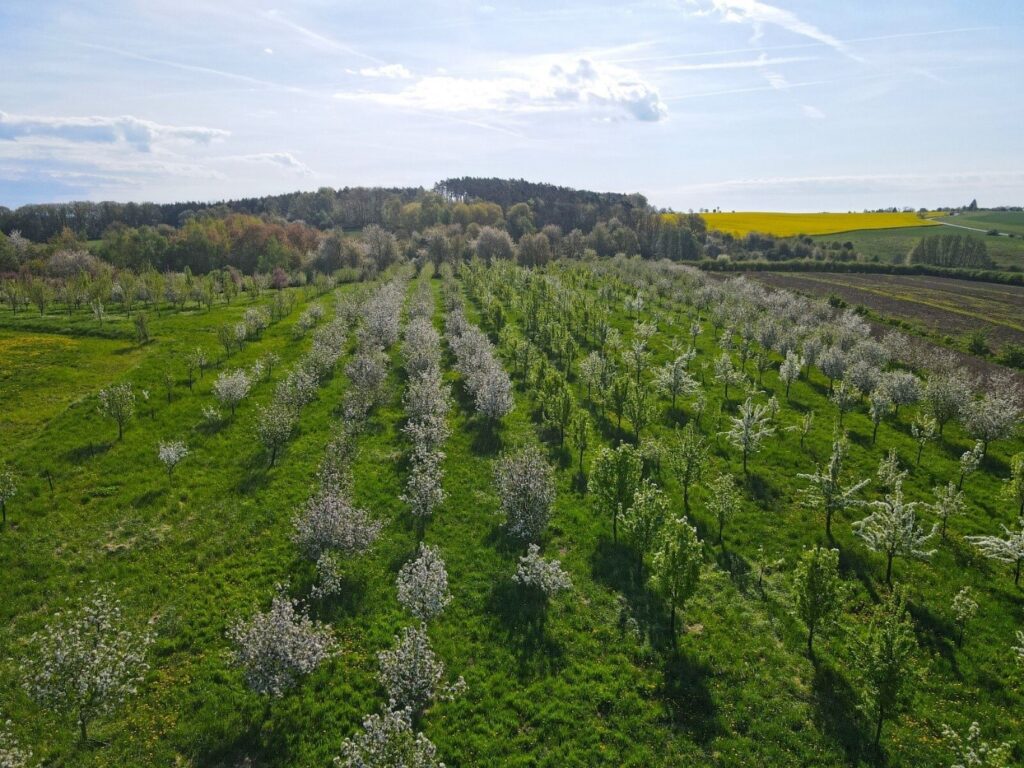
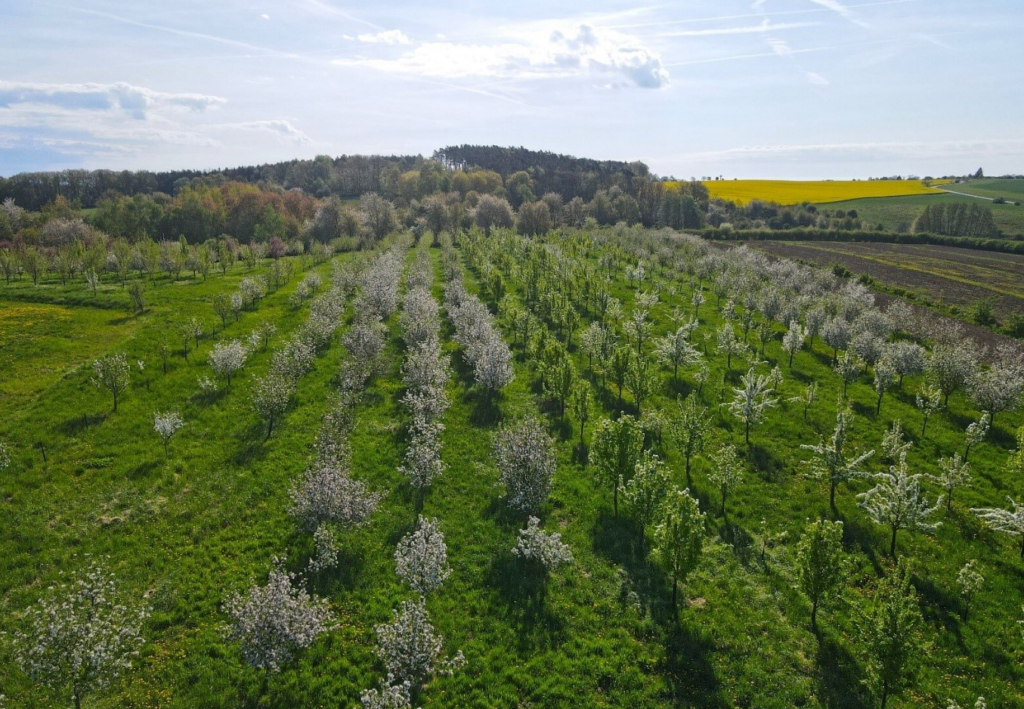
Two years ago, at the very start of the ReForest project, we visited Jagava Permafarma in the village of Veselice — a farm in the process of transforming a historic farmstead into a living permaculture and agroforestry system. Tomáš Franěk had already been planting trees since 2014, guided by a vision of cooling the landscape, rebuilding soil fertility, and producing healthy food without synthetic inputs. The ambition was clear; the results were still emerging. Today, that transformation continues — steadily, sometimes stubbornly. Chestnuts are fruiting. Apples are finding buyers. And Franěk has gone an entire season without reaching for a plant-protection product. In this follow-up conversation, we return to Jagava to hear what two more years of patient, practical work have added to the picture.
Since the original case study, what have been the most significant developments on the farm?
The work has continued on multiple fronts. On the infrastructure side, we’ve completed rough façades and installed windows on several key buildings — which means interior reconstruction can begin gradually when resources allow. It’s slow progress, but it matters for the long-term functioning of the farm.
On the production side, we’ve expanded our fruit shrub plantings, particularly blackcurrant and aronia, to ensure more stable yields and provide raw materials for blending specialty flavoured juices. We’re also experimenting with new fruit-processing recipes — finding ways to add value to what the farm produces rather than simply selling raw fruit.
How have the tree plantings and agroforestry systems developed over the past two years?
Progress on the newer agroforestry systems has been slower than I’d like. Most of the trees have survived, but wildlife pressure has intensified — even in areas that were previously left alone. Wild boar in particular have become a real problem. The older chestnut plantings are now producing beautifully, but we find ourselves competing with the boar to get to the harvest first.
There’s something almost fitting about it — ten years of patient cultivation, and then you’re racing a wild boar to the chestnut tree. It keeps you humble.
“The older chestnuts are producing beautifully — but wild boars have developed a taste for them too. We’re effectively competing with them to harvest first.”
One of your core goals was to cool the landscape and improve water retention. Are you seeing evidence that it’s working?
I believe it is, based on two sources of evidence. Satellite imagery monitoring soil moisture shows encouraging signs, and direct observation in the field backs this up: vegetable and potato rows near the agroforestry plantings are visibly larger and more vigorous than those further away.
We’re now taking this further. We’re preparing a small research project in cooperation with VÚKOZ and Jakub Houška to measure meteorological data and soil and air moisture at varying distances from the agroforestry belts. The goal is to move from observation to documentation — to have numbers that can actually be shared with others.
Wildlife damage was already a challenge in the original case study. Has the situation improved?
Not sufficiently. Most plantings have an outer wire fence combined with a living hedge of shrubs, and each individual tree has plastic mesh protection around it. Over the past two years it’s become clear that this isn’t enough. We plan to add further individual protection around every tree — more labour, more cost, but unavoidable if the plantings are going to establish properly.
It’s one of those challenges that doesn’t have a clean solution. The wildlife pressure reflects a broader landscape issue — when the surrounding land offers little habitat or food, your farm becomes very attractive.
Have you introduced any new approaches to soil, water, or plant management since we last spoke?
A few. I’ve recently completed a Soil Food Web seminar on effective microorganisms and plan to begin applying these methods next season — it’s a direction I’m genuinely excited about in terms of building soil biology. In vegetable production, we’ve shifted to wider sowing rows, using a combination of mechanical cultivation and mowing between them, in line with regenerative agriculture principles.
For new tree plantings, we’re now adding zeolite and hydrogel to the planting holes. The results have been striking — nearly 100% establishment, with minimal need for follow-up irrigation. For a farm managing trees across a large and varied site, that’s a meaningful change.
“My greatest success is that I no longer need to use any plant-protection products — yet I still harvest a meaningful yield of vegetables and fruit.”
How has the farm been received by visitors and the local community?
Visitors respond very well. Many people come for seminars and events at the farm’s creative centre, and I offer guided tours that explain the relationships between soil, fertility, and landscape resilience. The combination of information and visible practical examples seems to land effectively — even with professionals in the field who might be expected to be more sceptical.
The picture is different with neighbouring farms. Most of them operate on areas exceeding 2,000 hectares. The scale and the logic of what we’re doing here simply doesn’t map onto their situation in any direct way. That’s not a criticism — it’s just a reality about who our model is most relevant for.
Looking ahead, what are your main priorities for Jagava in the coming years?
The core vision stays the same: a balance between ecological harmony and healthy food production. Within that, I want to deepen the focus on soil fertility and find ways to increase productivity without compromising the principles we’ve built the farm around.
One project I’m particularly keen on is developing an educational walk across the farm — a marked route with interpretive texts explaining each section, the challenges we’ve faced, and the solutions we’ve found. Along the route there would be small rest points featuring insect hotels, reptile habitats, and composting demonstrations. The idea is to make the farm’s logic legible to anyone who visits, not just those who already share the same frame of reference.
The apples tell their own story already. People who see them at the cider mill — without knowing anything about how they were grown — stop and want to buy them. That kind of quiet proof is what we’re building toward.
This blog article is developed as a result of the co-creation work with Living Labs coordinated by EMEA with the support of Project partners and living Lab leaders.
 English
  German
  French
  Spanish
  Danish
  Hungarian
  Czech
Czech  Bulgarian
  Dutch
Dutch