
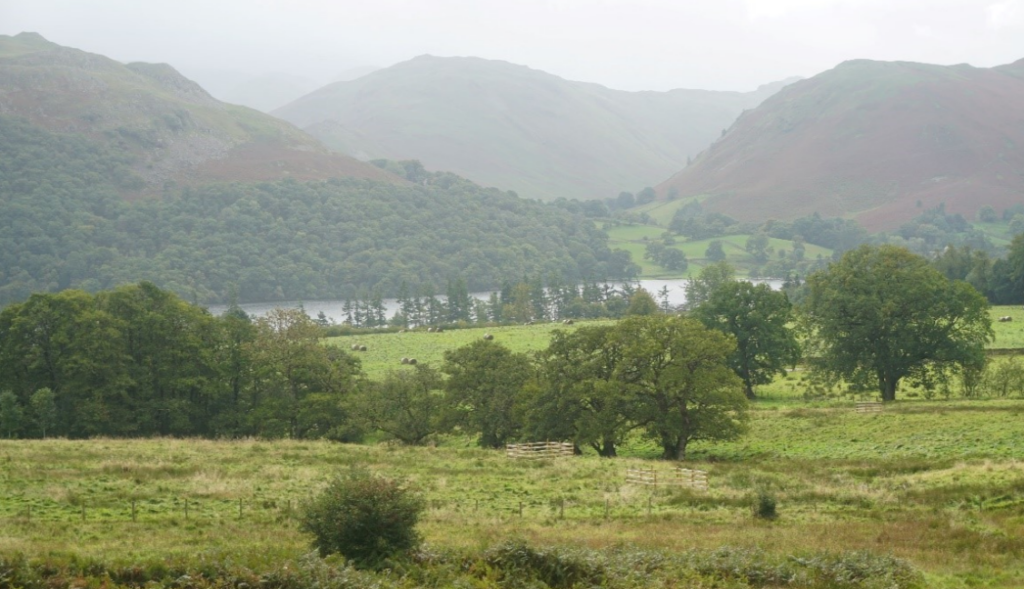
Hedgerows and Wood Pastures: Living Boundaries of British Agroforestry
In the United Kingdom, agroforestry is deeply rooted in cultural landscapes such as hedgerows and wood pastures. Hedgerows have shaped the British countryside for centuries as living field boundaries. They marked ownership, enclosed livestock and structured rural space, while traditional practices such as hedge laying and coppicing connected farming with local craft and knowledge.
Wood pastures, such as those found at Gowbarrow Hall in the Lake District, represent another historic agroforestry system. Scattered trees, grassland, scrub and grazing animals create a patchy landscape with high cultural, ecological and agricultural value. These systems provided grazing, timber, firewood, tree hay and seasonal feed such as acorns or chestnuts.
Today, both hedgerows and wood pastures are being rediscovered as resilient agroforestry systems. They support biodiversity, carbon storage, shade, shelter, soil protection and landscape identity, while showing that modern agroforestry can grow from long-standing rural traditions.
Sources: Carey et al., 2008; Maddock, 2008; Atkin-Willoughby et al., 2022; Smith et al., 2023; Clark et al., 2025; UK BAP Priority Habitat Action Plan; Cumbria Biodiversity Data Centre.
This blog article is the result of collaborative work carried out by the Czech Living Lab on the topic of Culture and Heritage, with the support and input of project partners and Living Lab leaders across the ReForest project.
 Spanish
  English
  German
  French
  Danish
  Hungarian
  Czech
Czech  Bulgarian
  Dutch
Dutch